
Six months into 2026—and roughly six months into what I have been calling “Rupen 2.0”—I had intended to write a half-year review. It’s now mid-August and we are coming to the end of summer—so much for the timetable. I recently went back through the notes I had been making over several weeks and realised that perhaps the delay was appropriate. One of the recurring lessons of this year has been that things take longer than you expect.
The pause that wasn't
Earlier this year, I wanted to repeat something similar to the “monk mode” experiment I had tried before. This time, I was thinking about the idea of taking a deliberate pause, following one of Cal Newport’s podcast episodes. The idea was not simply to stop working for a few hours, but to step away from the usual distractions, focus on one or two areas that needed attention and think properly about what practical changes I might make.
In principle, it sounded excellent, so I planned a distraction-free day. I chose M+ as my location, thinking a change of surroundings might help generate some fresh thinking. I worked hard during the preceding few days to clear as much as possible from my desk and, by Friday morning, everything seemed perfectly set up.
I made my way across to West Kowloon, including a pleasant ferry ride, planning to deal with a little administration in the morning before spending the afternoon on my grand pause. Naturally, that isn't quite how it turned out. The administration took longer than expected, and I spent far too much time trying to find somewhere suitable to work and, by the time I finally packed my laptop away, I was already irritated with myself.
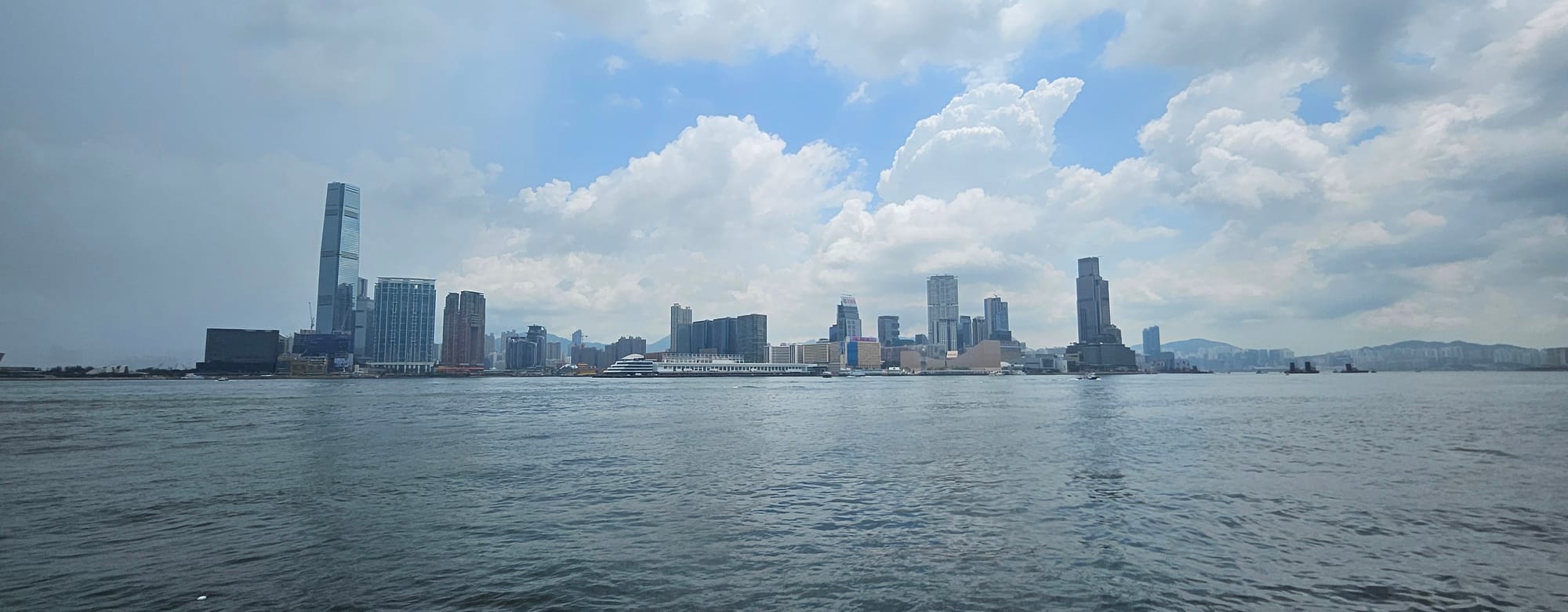
I then started wandering around M+, checking my phone and then checking it again. There was construction noise, and I struggled to find somewhere quiet to sit and it was raining, so going outside wasn't particularly attractive. Eventually, I abandoned the whole exercise and went home early.
I treated the pause as something that needed to be created perfectly: clear the diary, choose the right location, block out several hours and then—presumably—profound thoughts would appear. The most useful exercise from all of this was the reflection itself: go back to basics and start small. An hour without distractions, a walk without my phone, or a little more space in an ordinary day rather than waiting for the perfect conditions for an extraordinary one.
Building something
At the beginning of the year, I thought I was starting with three possible pillars of work. One didn’t work out, another is progressing and the third has begun to bear fruit. Almost everyone I have spoken to who has built something of their own has told me that progress is rarely quick. I knew that before I started, but knowing it and experiencing it are quite different things.
My working life today looks very different from the one I left behind. There isn't an endless stream of matters or the same rhythm of internal meetings, and the pace varies considerably from one day to another. I have control of my day, but with that control comes greater responsibility for creating the work as well as doing it.
My legal work is through GPS Legal, where I am building my practice and client base. Over the past few months, I have advised businesses on corporate transactions, investments, commercial agreements, restructurings and regulatory matters. Some have involved familiar territory, while others have taken me into industries or questions I have not previously encountered in the same form. That has reminded me that the value of experience is not simply having encountered the exact same problem before; the importance is knowing how to approach a problem you haven't encountered before.
It is knowing which questions to ask, where the risk is likely to lie and when something does not look quite right. It is knowing when you need to dig deeper and, equally importantly, when you need input from someone with different expertise, and then making a judgement. Increasingly, that is what I think clients are looking for: not someone who pretends to know everything at the beginning, but someone who will take ownership of the issue, work through the complexity and help them reach a sensible commercial outcome. There has been plenty of learning along the way, and I hope there always will be.
Time, value and the clock
The way I work has also changed. A significant amount of my work has been on fixed fees, and I am still working out exactly where fixed pricing works best and where it does not. One aspect of it has been particularly interesting: I don't find myself thinking about the clock in the same way.
If I need to spend more time understanding a client's business, researching an unfamiliar point or thinking about how different pieces fit together, I can do that without focusing on how much additional time is being spent. That doesn't mean time suddenly becomes irrelevant; the economics of the work still have to make sense. But it does change the psychology of the work, shifting the emphasis a little from how much time was spent to what actually needed to be done. I like that.
I am also still learning where and how to price my own work. There is no grand revelation here; it is another part of building something. Try something, see what works and adjust where necessary.
Leverage without outsourcing judgement
As I build the practice, I have also been thinking a great deal about leverage. At some point that may mean people, but for now one form of leverage I am testing is how I can utilise AI.
AI can be an uncomfortable subject in professional services. I don't think it is useful either to treat it as magic or to dismiss it as dangerous. I am testing and experimenting with it, but I make the judgement; I don't outsource that judgement to AI.
I touched on this recently in a guest post for Eight PR: as access to information becomes easier, the value increasingly lies in filtering it, prioritising it and deciding what actually matters. While writing this article, I used AI to search my reading highlights and suggest a few possible quotes. It was still up to me to decide which one, if any, belonged here.
Professional use raises different questions, including data security and legal constraints that I am still working through. I have previously been given agreements that clients generated using AI and asked me to review, and I’ve written about this before. Sometimes they were perfectly reasonable starting points; sometimes they needed considerable work.
The important question is whether the person using AI can recognise where the answer is incomplete, where the drafting does not fit the circumstances, where an assumption is wrong or where something important is missing. That requires judgement. AI can help interrogate an idea, organise information and identify issues to investigate, but it cannot relieve you of responsibility for the answer.
Work is finding its way to me
The other pleasant surprise of the past several months has been where work has come from. I have had to build a completely new client base from scratch. Some of that work has come through people I have known for years, internal and external referrals, and people I have met relatively recently. There hasn't been one magic source; instead, it has accumulated.
I am nowhere close to declaring that I have cracked the formula for building a practice, and I doubt there is a formula. But I am beginning to trust the process a little more than I did at the start of the year. Do good work, stay visible, maintain relationships, keep meeting people, be useful and allow time to do some of the work for you.
Making room for writing
One thing that has become harder as legal work has increased is writing, and my consistency has slipped. I am still trying to work out the right balance because I know I want to keep writing.
At its simplest, writing is a creative outlet for me, but it also forces me to slow down, take a beat and think. I often begin by physically writing, putting pen to paper, and these reflections began that way. My writing often starts as a stream of thought that then needs significant reworking before it becomes coherent, but that is part of the process.
Perhaps that is also why this “half-year review” has taken me so long. I wasn't simply trying to record what had happened over the past several months; I was trying to understand what those months had taught me.
Control rather than escape
The end of July was summer-holiday time. I travelled to Canada and then made a short trip to London and Paris, with a lot of travel packed into a relatively short period. The reason for the side trip was an important one: my parents' 50th wedding anniversary.
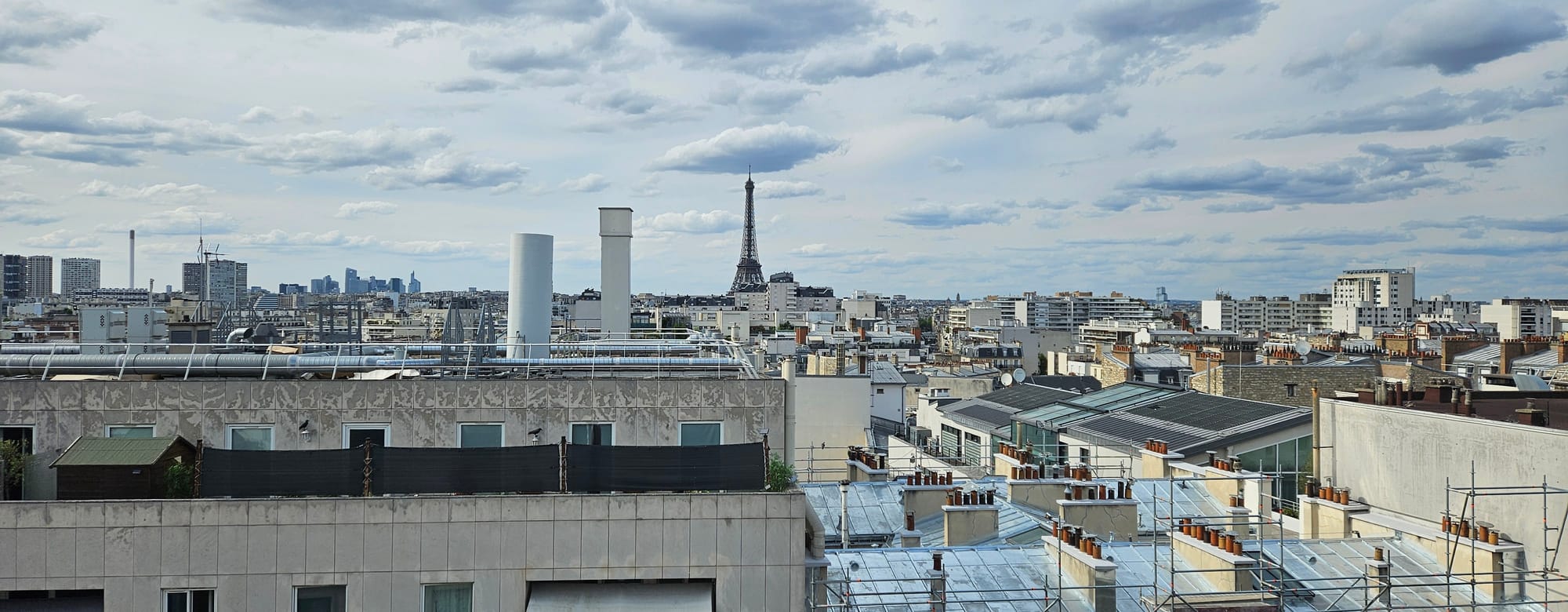
I also had to deal with some work while I was away, which initially troubled me. I have written before about the stress caused by work intruding into holidays, and I have been adamant that I did not want to return to that. Yet there I was, on holiday, working. Had I simply recreated the problem I thought I had escaped? Not quite, because this time I had control.
I have spoken to a number of people who run their own businesses, and a recurring observation is that completely separating yourself from the business can be difficult. Perhaps the more useful question is not whether work ever crosses into personal time, but on whose terms that happens.
This time, I wasn't dealing with artificial urgency. I wasn't taking calls because someone else had decided something suddenly needed to happen; I wasn't responding to emails at all hours or trying to clear my inbox. I could decide what could wait and what I was prepared to take on. I even turned down work where the timing did not fit with my travel and was able to set deadlines around my schedule. I was able to retain control over where the boundary sat.
That flexibility continued when we came home and had to move. I didn't need to take formal time off; the move simply happened around everything else. I did work on some evenings and over a weekend to meet deadlines, but again the difference was that I was choosing when and how to make that trade-off.
Just onwards
So where does all this leave me after seven-odd months? I can’t predict the future, but at the moment I feel optimistic. I have achieved a lot, but there is still a lot I want and need to do. I am still very much in the build phase, with plenty left to learn. Some things have worked, others haven’t, and some are simply taking longer than I expected.
I keep coming back to the same point: things take time, and perhaps things should take time. I certainly haven't figured everything out yet, but I am becoming more comfortable with the fact that I probably shouldn't have everything figured out at this stage.
James Clear, in Atomic Habits, describes a “commitment to tiny, sustainable, unrelenting improvements.”
That idea resonates with where I find myself now.
What matters is that I am doing rather than waiting for the “perfect” moment. There never is a perfect moment and, if I waited for one, I would always be waiting. So I will keep learning, keep making adjustments where necessary and keep moving.
It is not necessarily onwards and upwards; it is simply onwards. Onwards is progress and, perhaps more importantly, onwards is sustainable progress.