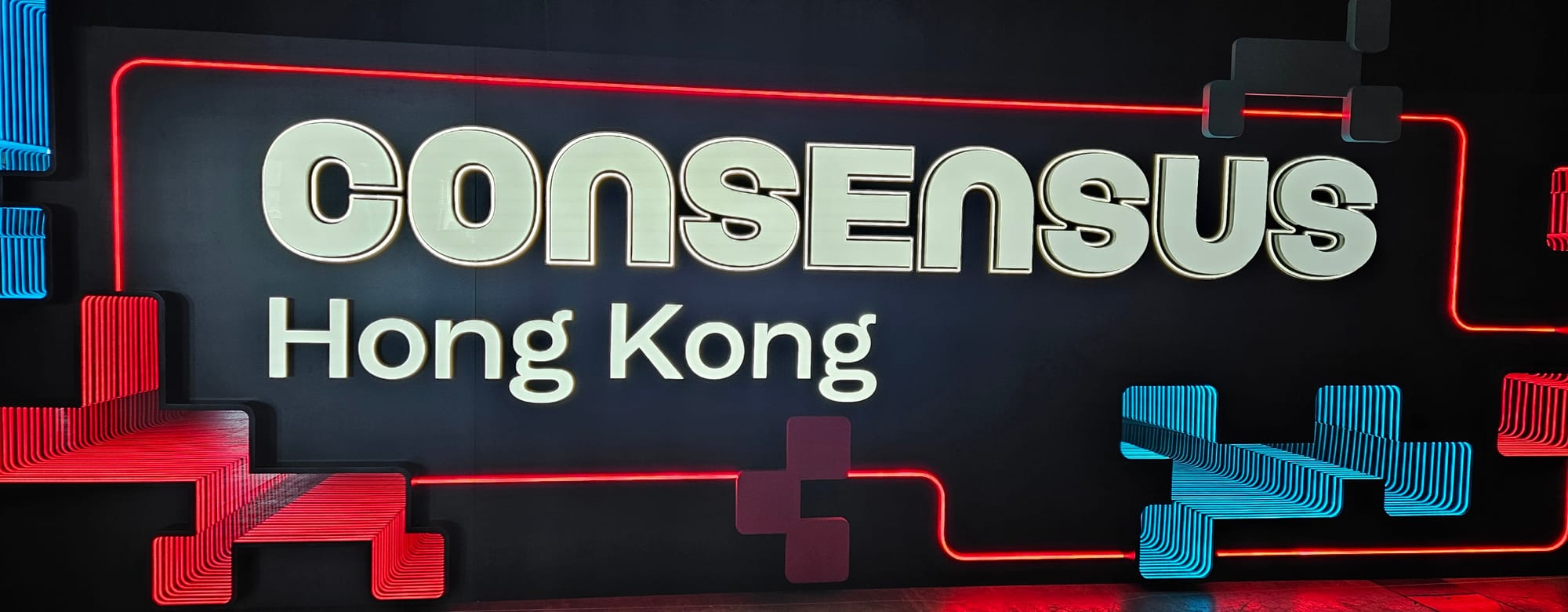

Web3, DeFi, RWA, DAO, cold wallets, on-chain, off-ramp! It was like learning a new language. As I mentioned a few days ago, I attended Consensus Hong Kong this week. Breaking the "dry spell" of big event business development felt significant.
Whatever I expected, the reality was something else entirely.
From Pond to Ocean
My previous experience with events—legal, banking, funds—usually involved a curated crowd where 1,000 attendees is considered significant. You know the drill: one big hall, a few booths, and familiar faces.
Consensus was a different beast. With 15,000 attendees, hundreds of booths, and a relentless schedule of presentations, the scale was staggering. I went from being a "small fish in a pond" to feeling like a tadpole in the ocean.
Admittedly, the first moment of stepping in was overwhelming. The sheer volume of noise and activity can trigger that "imposter syndrome" friction—I don’t know anyone here; where do I even start?
But I took a beat. I decided to wander the floor, drop into talks, and simply observe. Once the initial sensory overload settled, the insights began to form.
Signal vs. Noise in Web3
The conference floor was heavy on "crypto culture"—loud, vibrant, and chaotic. I noticed that while people were superficially friendly, there was a transactional restlessness; eyes darting to phones, always looking for the next interaction.
However, beneath the noise, the "Professional Stage" told a different story. The conversation is shifting decisively toward the Tokenisation of Real World Assets (RWA). This is where the industry matures. This is where the intersection of tokens and real-world finance demands serious legal architecture.
Coupled with the Hong Kong government’s announcement of digital-asset-friendly measures, the roadmap for 2026 is clear. We are moving from "wild west" speculation to regulated, structured financial products. For a lawyer, this is the sweet spot: where clients need regulatory certainty and commercial viability.
The Long Game
In the legal world, there is always pressure to find the immediate lead. It would have been wonderful to walk out of the hall with an engagement, but that is rarely the reality of high-value professional work.
I made connections, not just contacts. But the lesson re-learned is that valid relationships take time to nurture. You cannot rush trust. The "Long Game" isn't just a catchy phrase; it is an operational necessity if you want to build a practice based on value rather than churn.
Wins and Systems
Speaking of value, I issued my first invoice of the year today. A quiet milestone, but a vital one for the 2026 journey.
On a personal level, simply dealing with the jitters and chatting with people in completely unrelated fields was a victory in itself. It forces you to refine your pitch and listen more broadly. To manage the chaos of the week, I relied heavily on my systems:
- Prioritisation: The conference forced me to clear the decks, prioritising deep work to free up two days for the event.
- Obsidian: I’m using the 'Daily Notes' function to capture these fleeting thoughts before they evaporate. Keeping the tech stack simple prevents the "plugin rabbit hole" and keeps the focus on output.
Looking Ahead
So, will I go again next year? Potentially. But with a refined strategy: more preparation, pre-booking meetings, and a focus on the side events where the deeper conversations happen.
For now, I am looking forward to switching off for the upcoming Chinese New Year break in Hong Kong. Tonight, it’s off to the AIA Circus—a fitting end to a week that felt like a bit of a circus itself, albeit a profitable one for the mind.